
4 Writing Tips I Wish I’d Ignored
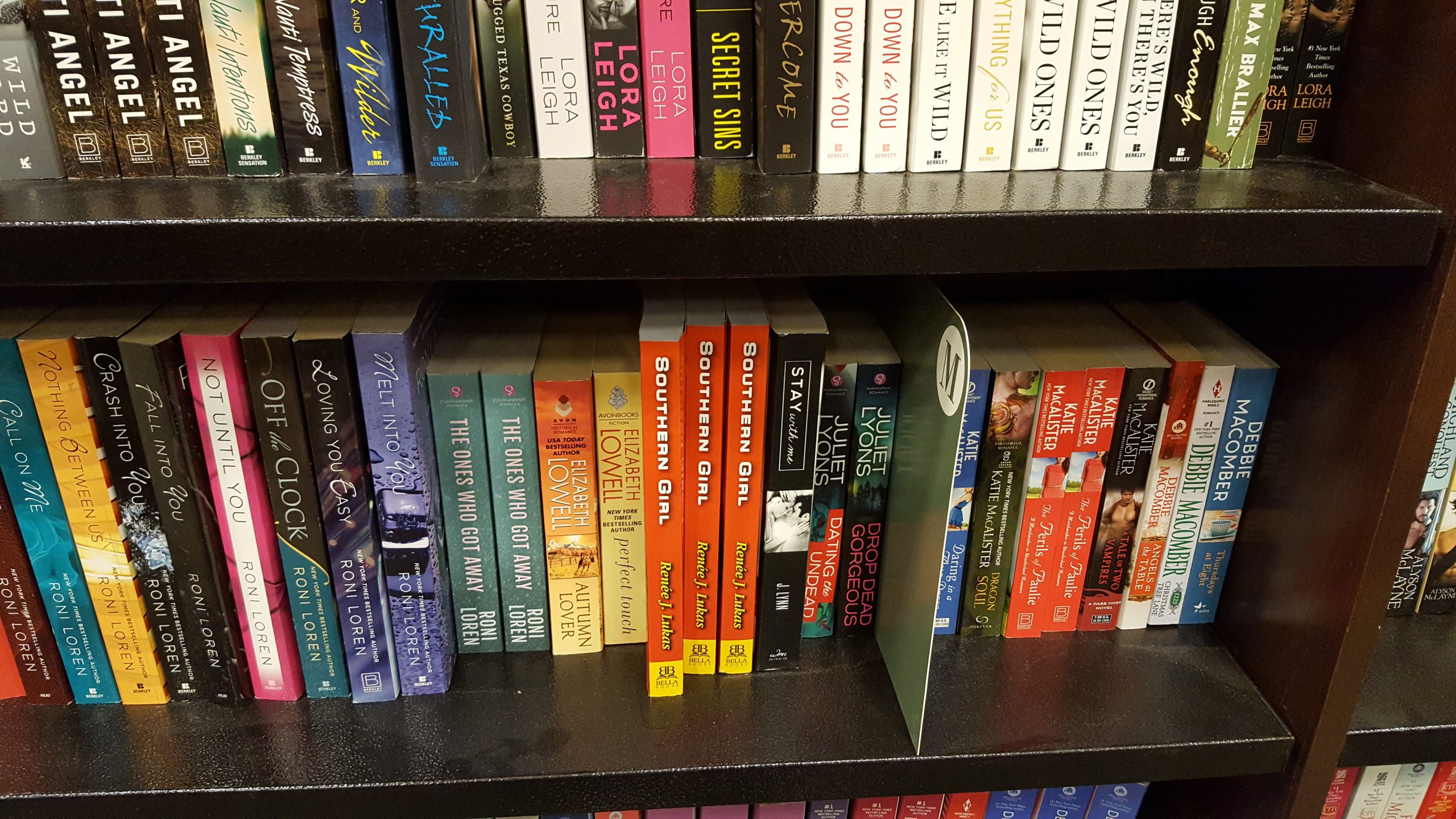
by Renée Lukas
Writing “Rules” and Why I Chose to Rethink Them
 After years of trying, continuously improving my craft, networking, and learning from all kinds of writing-related resources, I finally got published. Along the way, I noticed some tried-and-true tips that kept surfacing, tips that were rarely, if ever, challenged. For many of us, it can take time to really understand what works and what doesn’t, and to realize that the same approaches don’t necessarily work for everyone.
Here are just a few of these writing “rules”, and why I chose to rethink them.
Tip #1 – Keep your REAL job, and just write on the side.
We all need jobs that pay the bills. You can’t write if you’re starving, or your heat is turned off in the dead of winter. Your basic needs must be met. Having said that, I take issue with the phrase “on the side.” Writing isn’t a salad. It’s not a side dish, while you feast on a main course that, while it might pay the bills, sucks out your soul because it’s not your passion.
For years I worked full-time while scribbling notes and outlining my stories on my lunch hour, sometimes in my car in a parking lot, and on weekends. I was usually too tired after a nine- or ten-hour day in a corporate job to have any mental capacity to do the one thing that meant so much to me: write fiction.
In truth, writing is a craft that takes time, thought and plenty of rewrites. Too many people, including writers themselves, treat writing as a frivolous hobby instead of the demanding career it really is. When you do that, you not only sell yourself short in terms of pay if you’re a freelance writer, but also in your mindset. I believed that one day my writing would overtake the corporate job I had, but it took time. Eventually I landed an agent for that story I was working on in a parking lot. But I knew at some point I was going to have to put in more time if I was going to launch a serious writing career. If you dreamed of becoming a dancer, you wouldn’t practice a few moves on the weekends and then decide you were Broadway ready, would you? Of course not.
If you can’t quit your other full-time job right now, but you know you want to be a writer—and not one of those people who just talks about writing—change your attitude. Start thinking of the full-time job as the side dish and writing as the main course. This little psychological shift will energize you more than you realize. Most importantly, a change in your thinking will often lead to a change in results.
Tip #2 – You must read a lot to be a good writer.
Now before you send me hate mail, I do agree that it is good to read as much as you can. Absolutely. After all, would you expect a good screenwriter to have never seen a movie? It’s also important to know that writing uses a different side of the brain than reading.
When I was young, I had trouble focusing long enough to finish reading a book. My mother told me I had to read Harriet the Spy before the summer was over. No offense to Harriet, but it was a nightmare for me. I stretched out on the floor, kicking my legs, feeling restless, unable to discern what Harriet was doing and why. I’m sure it was a great book, though I never did finish it. It sat on the bookshelf, taunting me all summer long. Maybe I had some attention deficit issues, but back then nobody talked about that. The result? Even though I loved inventing stories, I just assumed my lack of interest in reading meant that I could never be a writer. Not true!
I later discovered Choose Your Own Adventure® Books, which enabled me to interact with the story, making decisions that led to several different outcomes. As someone who liked to create my own story, these books were a perfect fit. I graduated to short stories, which held my focus better. Luckily, as I got older, I had some memorable English Literature teachers who made the works of Hawthorne and Voltaire interesting because we could discuss and analyze the stories, exploring what the authors were trying to say. This participation helped me to feel more connected to the art of storytelling. Despite my struggle with focus, I sought out a career as a copywriter, then a writer of my own stories. I even worked as an editor! But I almost let this often-heard “rule” about reading discourage me from doing the thing I love most. Don’t let that happen to you!
Tip #3 – Write what you know.
Because of this advice, I used to think that unless my story was about growing up in smalltown America, I couldn’t write authentically about it. I’ve heard other writers complain that they grew up on a cattle farm or (fill in the blank) and don’t want to write about that. Guess what? You don’t have to!
As they say in The Princess Bride, “I do not think it means what you think it means.”
Writing what you know has more to do with the insights you’ve gained from your real-life experiences and less to do with the actual setting. In other words, it’s about your inner life, not your outer life. For example, if you’ve become disillusioned with the corporate hierarchy where you work, and you want to write about space aliens, write a story in which the hierarchy of space commanders leads to devastating consequences with an alien species. Or write about a dysfunctional alien hierarchy that could blow up their own planet. See how that works? Take the nuggets of honesty and realizations from your own life and employ them in any story your imagination can create.
You can also take the “Write what you know” tip more literally. For instance, if you have a deep knowledge of the inner workings of a hospital or chemical plant or an obscure type of business (the competitive world of doll clothing makers?), you can parlay that into a compelling story about a world not everyone knows about—and it will feel real because you’re drawing from real-life experience.
Don’t get hung up on the knowledge part and let that prevent you from exploring an interesting idea. And remember, what you know is an immense collection of your lived experiences, which can easily find their way into stories about anything.
Tip #4 – Finish one project at a time.
The idea here is that if you have several projects going, you’ll never finish one of them. But it’s not necessarily true.
Everyone has a different process that works for them. I learned early on that I was the type of writer who enjoyed juggling multiple projects. Maybe this goes back to undiagnosed Attention Deficit Disorder—I’ll never know. But because of my focus issues, I found a way of working that has enabled me to complete several manuscripts.
Now don’t get me wrong. There are times when you need to focus on one project. You may have an editor waiting on your novel, or an agent waiting for the latest draft of your screenplay. In some cases, you can’t write only when you’re inspired. You have to put fingers to the keyboard, or pen to paper, whether or not the muse arrives.
If you are juggling more than one project, I find it’s a good idea to work on the one you’re most excited about on a particular day. If one of your projects has begun to feel stale, you may have a eureka moment in the shower, and then you’re able to continue working on that one the next day. For me, this style of working allows me to revisit stories with fresh eyes and catch something I didn’t see before. I can give them more life, adding layers to characters, deepening conflicts and anything else that will bring about that a-ha moment.
Sometimes I envision my projects as sandwiches lined up on a kitchen counter, all at different stages of completion, all waiting for the final slice of bread. If you’re stuck on a plot point or some element of your story that won’t budge, consider trying this approach to your work. Before you know it, you’ll have three finished books instead of one!
The important thing to remember is that we all have different personalities as writers, and what works for one doesn’t always work for another. The key is to find what suits you best and lean in to that. You may find yourself more inspired and consequently, more productive.
Good luck, and happy writing!